
The Truth About Cheap Pet First Aid Courses
If you have ever searched for a pet first aid course online, you will have seen them...
Courses that promise to teach you everything in an hour.
Courses that cost less than a bag of dog food.
Courses that say they will make you “fully prepared” without ever needing to practise.

And I get it. When you are busy, on a budget, or just trying to tick a box, cheap pet first aid courses can look like a bargain.
But here is the truth.
When it comes to lifesaving skills, cheap does not always mean good. And in some cases, it can mean dangerous.
As a pet first aid instructor, former lecturer, and someone who has had to save her own dog from choking, I see the consequences of poor quality training all the time.
So let’s talk honestly about what cheap pet first aid courses often miss, what you should be looking for instead, and why this matters more than most people realise.
Why Pet First Aid Training Matters More Than You Think
Pet first aid is not about memorising facts. It is about what you can do when your heart is racing, your hands are shaking, and a pet is depending on you.
Emergencies do not wait for you to feel ready.
Dogs choke on toys.
Cats collapse.
Pets have seizures.
Animals bleed, overheat, go into shock, and stop breathing.
In those moments, Google is practically useless and can give conflicting answers. Panic is common. And hoping for the best is not a plan.
Good pet first aid training builds muscle memory, confidence, and decision making under pressure. That cannot be learned from a few slides and and no hands on practice.
What Cheap Pet First Aid Courses Often Lack
Not all low cost courses are bad. But many of the cheapest ones share some similarities.
1. No Hands On Practice
This is the biggest issue I see.
Many cheap pet first aid courses are entirely online or theory just based. Online courses absolutely have their place. And as a refresher, or something to have before you get to an in person course, they can be a great resource. They might show you a video of CPR, choking procedures, or bandaging, but you never get to practise it.
Watching is not the same as doing.
If you have never physically placed your hands on a mannequin, felt the resistance of the chest, or practised the rhythm of compressions, you are far more likely to freeze in a real emergency.
Confidence comes from repetition. Not from clicking next.
2. Outdated or Incorrect Information
Pet first aid guidelines change. Just like in human first aid advice, research evolves.
Some cheap courses recycle old content that is no longer considered best practice. I have seen courses teaching outdated CPR methods, unsafe heatstroke management techniques, and incorrect advice about wounds and bleeding.
If a course has not been updated in years, that should concern you.
Outdated training can be worse than no training at all.
3. No Real Understanding of Animal Behaviour
Animals in distress do not behave like animals in textbooks.
They bite.
They thrash.
They panic.
Many cheap courses do not cover how pain, fear, and shock affect animal behaviour, or how to keep yourself safe while helping.
This is especially important for pet professionals who work with unfamiliar animals.
First aid is not just about the injury. It is about the whole situation.
4. No Opportunity to Ask Questions
Real learning happens when people ask questions.
What if the dog is brachycephalic?
What if the cat has been hit by a car?
What if the pet is aggressive?
What if I am alone?
What if I panic?
Cheap courses often do not allow for real interaction, clarification, or scenario based learning.
You leave with information, but not understanding. Or worse, leave with more questions!
5. A False Sense of Security
This one is the most dangerous.
People walk away from cheap pet first aid courses believing they are prepared. But when something actually happens, they realise they do not know what to do.
I hear this a lot from students who come to me after doing just an online course.
They say things like“I thought I knew CPR, but I have never actually done it.”“I panicked and forgot everything.”“I was scared of doing it wrong.”
Training should reduce panic, not create it.
What a Good Pet First Aid Course Should Include
If you are investing your time, money, and trust into a course, here is what you should expect.
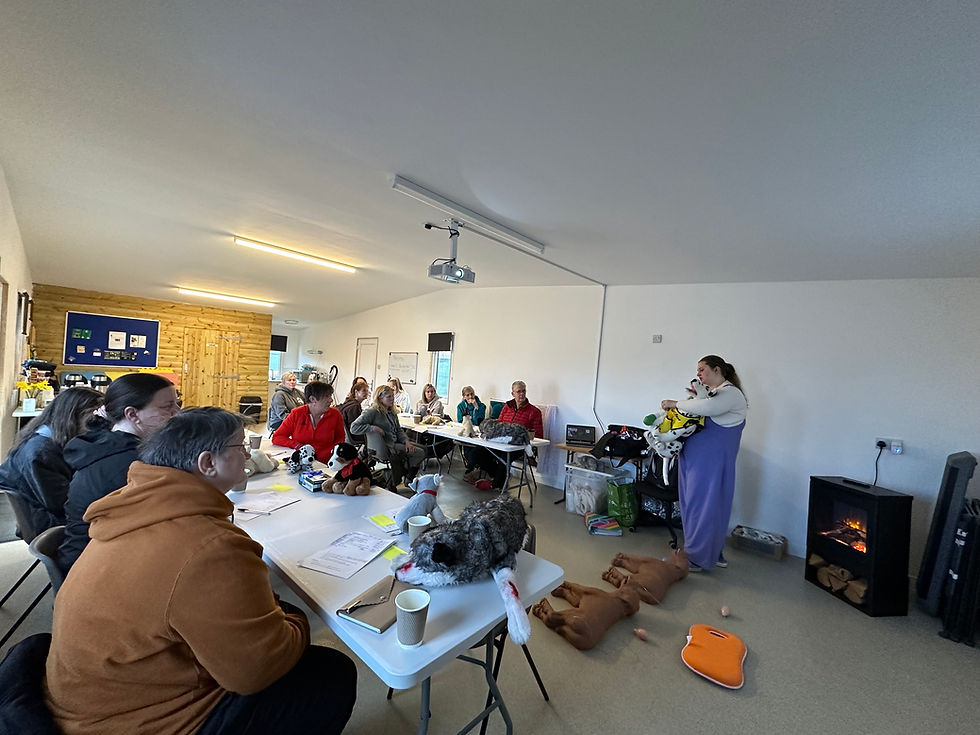
Practical, Hands On Learning
You should practise CPR.
You should practise choking scenarios.
You should practise bandaging.
You should practise decision making.
This is how confidence is built.
Up To Date, Evidence Based Content
Your course should reflect current best practice and modern guidelines.
Ask when it was last updated.
Ask where the information comes from.
Ask how often it is reviewed.
Realistic Scenarios
Emergencies can be messy. Training should reflect that.
Good courses use real world scenarios, not perfect textbook examples. A good instructor will have lived experiences.
They've seen it, dealt with it. Know how it feels.
A Supportive Learning Environment
You should feel comfortable asking questions, making mistakes, and trying again. All learning styles should be present in a lesson to help you, the learner.
If a course makes you feel uncomfortable, rushed, or embarrassed, it is not a good learning environment.
Clear Limits of What First Aid Is
Ethical pet first aid training never replaces veterinary care. It teaches you what to do until you can reach a vet.
Any course claiming to make you “vet equivalent” should raise alarm bells.

Why I Teach The Way I Do
I did not start teaching pet first aid because it looked good and seemed like something that would make me rich.
I started because I saved my own dog from choking to death on Christmas Day. And I realised how close I came to losing him. But my training? It saved him.
That moment showed me how unprepared most people feel in emergencies. Even people who love their pets deeply. And I wanted to help people feel confident, not scared.
My background in animal science, education, and pet care shaped how I teach. I wanted to teach in a way that was immersive, fun, and inclusive.
I do not want students to memorise.
I want them to understand.
I want them to practise.
I want them to leave knowing they can act.
That is why my courses are hands on, relaxed, and scenario based.
Not intimidating. Not rushed. Not overwhelming.
Is A Cheap Pet First Aid Course Ever Worth It?
Sometimes a cheaper course can be a good introduction.
But if it does not include hands on practice, updated information, and real understanding, it should not be your final stop.
You would not learn to drive by watching a video and then driving across the country. You should not learn lifesaving skills that way either.
The Real Question You Should Ask
Instead of asking, “What is the cheapest pet first aid course”...
Ask, “What will I actually be able to do when something goes wrong after taking this course?”
Because that moment will not care how much you paid.
It will only care what you can do.
Want To Learn Pet First Aid Properly?
If you want training that is practical, supportive, up to date, and designed to actually be remembered, I would love to help.
My courses are built for pet professionals and owners who want to feel prepared, not panicked.

Your pets in your care deserve more than hope.
They deserve someone who knows what to do.


Comments